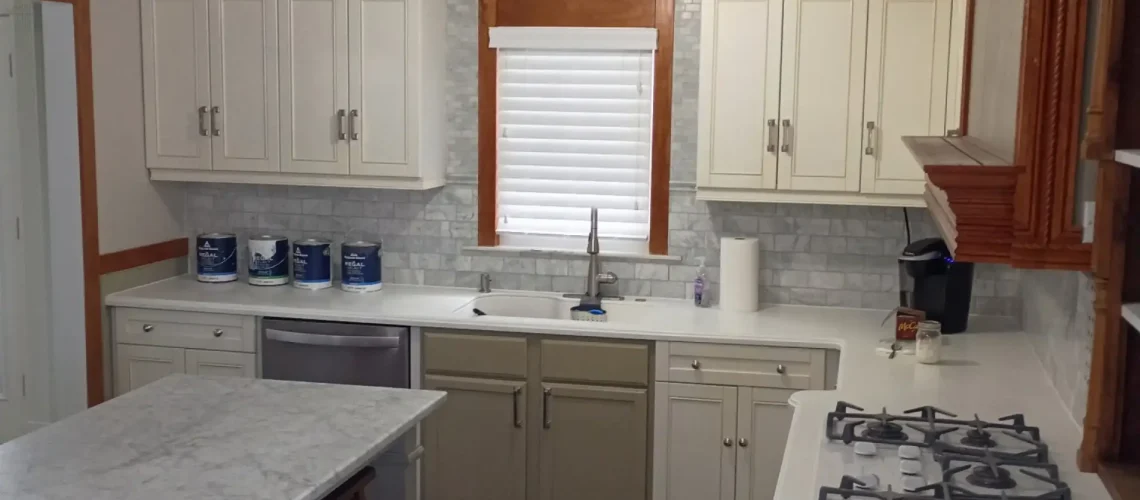
What Every Homeowner Must Know Before Painting Cabinets
Skipping Proper Surface Preparation
The most damaging mistake homeowners make when attempting cabinet painting is rushing through or entirely skipping surface preparation. This single oversight accounts for the majority of failed cabinet refinishing projects and can reduce your kitchen’s value by thousands of dollars. When cabinets are not properly cleaned, sanded, and primed, paint adhesion becomes compromised, leading to peeling, chipping, and an unprofessional appearance within months.
Kitchen cabinets accumulate years of cooking grease, oil residue, and general household grime that create an invisible barrier between the wood and new paint. In New Jersey homes, where humidity levels fluctuate throughout the year, this contamination layer becomes especially problematic. The moisture interacts with oils and prevents proper bonding, causing paint to lift at the edges and corners first. What initially appears as minor bubbling quickly spreads, creating an eyesore that screams amateur work to potential buyers.
Professional interior painting contractors understand that proper surface preparation takes as much time as the actual painting process. This includes removing all hardware, thoroughly degreasing every surface with appropriate cleaners, sanding to create proper tooth for adhesion, filling any dents or scratches, and applying a high-quality bonding primer designed specifically for cabinetry. Monmouth and Ocean County homes built in the 1980s and 1990s often feature oak cabinets with prominent grain patterns that require additional filling steps to achieve a contemporary smooth finish.
Many homeowners underestimate the physical demand and technical knowledge required for this preparation phase. A typical kitchen contains between 20 to 30 cabinet doors, plus drawer fronts and face frames, each requiring individual attention on both sides. Attempting to shortcut this process by painting over existing finishes without adequate sanding or priming inevitably leads to costly do-overs. When buyers encounter cabinets with visible peeling or rough texture during home inspections, they immediately question the overall quality of the property and use it as a negotiating point to reduce offers. The perceived lack of care extends beyond the kitchen itself, damaging the home’s overall marketability and requiring a complete refinishing before closing.
Using The Wrong Paint Type
Selecting inappropriate paint products represents the second most costly error in cabinet refinishing projects. Many homeowners assume that premium wall paint will perform equally well on cabinetry, but kitchen cabinets endure exponentially more wear and tear than vertical surfaces. Cabinet doors and drawer fronts experience constant touching, opening, closing, and exposure to heat, moisture, and cleaning chemicals. Standard interior wall paint simply lacks the durability and hardness required for these high-contact surfaces.
The paint chemistry matters tremendously for cabinet longevity and appearance. Cabinet-specific paints and enamels are formulated with higher resin content and specialized additives that create a harder, more scuff-resistant surface once fully cured. These products flow more smoothly during application, self-leveling to minimize brush marks and creating that sought-after furniture-quality finish. When homeowners use standard latex or acrylic wall paint, they end up with a soft finish that shows fingerprints, scratches easily, and requires repainting within a year or two. This premature wear dramatically reduces kitchen appeal and signals poor workmanship to prospective buyers.
Professional painting contractors also understand that paint sheen selection critically impacts both aesthetics and durability. While flat or eggshell finishes work beautifully on walls, cabinets require satin, semi-gloss, or gloss sheens that repel moisture and clean easily. Throughout New Jersey’s humid summers, moisture resistance becomes particularly important in preventing mildew growth and finish degradation. The wrong sheen choice can make cabinets appear dull and dingy, or conversely, so reflective that every imperfection in the underlying surface becomes magnified.
Cost considerations often drive homeowners toward budget paint options, but this represents false economy. The difference between quality cabinet paint and standard wall paint might amount to $100-200 for an average kitchen, yet the performance gap is enormous. Reputable brands specifically formulated for cabinetry cure to a harder finish, resist yellowing, maintain color integrity, and provide years of durable service. When cabinets require repainting after only 18-24 months due to inferior paint selection, the total project cost doubles or triples when accounting for labor, materials, and the disruption of doing the work twice. For homeowners planning to sell within five years, this premature failure can reduce offers by $3,000-5,000 as buyers factor in immediate kitchen renovation needs.
Poor Application Technique
Application technique separates amateur cabinet painting from professional results more than any other factor. Even with proper preparation and premium materials, poor application methods create visible flaws that immediately diminish kitchen value. Common application mistakes include applying paint too thickly, using inappropriate brushes or rollers, failing to maintain wet edges, and ignoring environmental conditions during painting and curing.
The challenge with cabinet painting lies in achieving a smooth, uniform finish free from brush marks, roller stipple, drips, and sags. This requires understanding paint viscosity, proper thinning ratios for spray application, correct brush loading techniques, and the optimal number of thin coats versus fewer thick applications. Most homeowners apply paint too heavily in an attempt to achieve coverage quickly, but this inevitably leads to runs and an uneven surface that telegraphs through subsequent coats. Cabinet doors have complex geometry with raised panels, recessed areas, and profiled edges that trap excess paint and create visible defects when technique is inadequate.
Professional house painters typically employ spray application methods for cabinets, using HVLP systems that atomize paint into fine particles for furniture-grade finishes. This equipment represents a significant investment and requires considerable skill to operate effectively, controlling spray patterns, maintaining consistent distance, and achieving uniform coverage without overspray waste. When homeowners attempt brush or roller application without proper technique, the resulting texture appears amateurish and drastically reduces perceived kitchen quality. The difference becomes especially apparent in strong natural light or with darker cabinet colors where every imperfection shows prominently.
Environmental control during application and curing also plays a crucial role in finish quality. New Jersey’s variable humidity and temperature conditions throughout the year affect how paint flows, levels, and cures. Painting during high humidity causes extended drying times and can trap moisture in the finish, creating a cloudy or soft appearance. Conversely, painting in overly dry or warm conditions causes paint to dry too quickly, preventing proper leveling and leaving visible brush strokes. The curing period extends beyond simply drying to the touch; cabinet paints require 7-14 days to fully harden and develop maximum durability. Homeowners who reinstall hardware and begin normal use too soon damage the still-curing finish, creating permanent marks and adhesion problems that compromise the entire project.
Protect Your Kitchen Investment
Color selection mistakes can instantly date a kitchen and significantly impact resale value, even when execution quality is otherwise excellent. Trendy colors that feel contemporary today often appear dated within 3-5 years, limiting buyer appeal and forcing price reductions. The temptation to embrace bold, personalized color choices must be balanced against long-term market preferences, especially for homeowners planning to sell within a decade. What works beautifully in design magazines may alienate the majority of potential buyers in your local market.
The safest choices for maximizing kitchen value remain neutral tones: whites, creams, soft grays, and greige shades that provide timeless appeal and complement diverse design styles. These colors make kitchens appear larger, brighter, and cleaner while allowing backsplashes, countertops, and flooring to serve as accent elements. Throughout Monmouth and Ocean County, the most successful kitchen renovations consistently feature neutral cabinet colors that appeal to broad buyer demographics. When homeowners select highly saturated blues, greens, or dark dramatic colors, they immediately narrow their buyer pool to those who share identical taste preferences.
The relationship between cabinet color and existing kitchen elements also demands careful consideration. Paint color must harmonize with countertops, backsplash tile, flooring, and appliances that typically remain unchanged during cabinet refinishing. A color that appears perfect on a sample card can clash dramatically with existing granite countertops or tile selections, creating visual discord that reduces the entire kitchen’s appeal. Natural and artificial lighting conditions further complicate color selection; a shade that looks crisp and clean in the showroom may appear yellow, gray, or dingy in your specific kitchen environment.
Professional interior painting services provide color consultation as part of the cabinet refinishing process, helping homeowners evaluate options against existing elements and lighting conditions. This expertise prevents costly mistakes where cabinets are painted in colors that looked appealing in isolation but fail in context. The consultation process typically includes testing multiple samples on actual cabinet doors, viewing them at different times of day, and considering how the color will photograph for listing presentations. When planning to sell within three to five years, the investment in neutral, market-friendly colors consistently returns 3-5 times the additional consultation cost through faster sales and higher offers. Buyers touring homes immediately notice when cabinet colors feel trendy or personalized rather than broadly appealing, and this perception directly impacts their willingness to meet asking prices.
Schedule Your Cabinet Painting Consultation
If you’re considering cabinet painting, take time to evaluate the complexity honestly. Consider the specialized skills required, the investment in proper tools and materials, and the time commitment for proper execution. For most homeowners, professional services provide better value, superior results, and guaranteed outcomes that protect kitchen value.
When selecting painting contractors for cabinet work, ask specific questions about their process: What preparation steps do they include? Which product systems do they use? How do they handle application, brush, roller, or spray? What curing time do they recommend before normal use? How do they manage details like hardware and final adjustments?
These questions reveal whether a contractor understands cabinet refinishing’s specialized requirements or simply treats it as another house painting project. The answers directly predict whether your investment will enhance your kitchen’s value or become another costly mistake requiring correction.
Your kitchen represents one of your home’s most valuable spaces. Cabinet refinishing done correctly transforms the room’s appearance, modernizes your home, and provides excellent return on investment. Done incorrectly, it damages your property’s value and creates expensive problems. Understanding these costly mistakes helps you make informed decisions that protect your investment and ensure beautiful, long-lasting results.
For homeowners in Freehold and throughout the region who want to refresh their kitchens without replacement costs, professional cabinet painting offers exceptional value when executed with proper expertise. Taking time to avoid these common mistakes, or partnering with experienced professionals who understand the specialized requirements, ensures your cabinet project enhances your home’s beauty and value for years to come.